



In the fascinating world of the Chinese language, understanding the meaning and usage of characters is essential for language learners. One such vital character is 寫 (xiě), which translates to “write” in English. This article will delve into the meaning of 寫, its grammatical structure, and provide various example sentences to illustrate its use in everyday language.
1. Understanding the Meaning of 寫 (xiě)
The character 寫 (xiě) is a verb that means “to write.” It encompasses the act of putting down words on paper or digital media, composing texts, or even creating literature. Writing is a fundamental skill in communication, making this character significant for learners of Chinese.
1.1 Cultural Context of 寫
In Chinese culture, writing is not just a practical skill; it is also an art form. The ability to write beautifully, often called “shufa” (书法), holds great esteem. Thus, the character 寫 carries both practical and cultural implications as it connects to the rich heritage of Chinese literature and calligraphy.
2. Grammatical Structure of 寫
The grammar surrounding 寫 (xiě) is straightforward, but understanding its use in sentences requires a closer look at its structure.
2.1 Part of Speech
寫 (xiě) is primarily used as a verb. It can be used in various forms to express different tenses and aspects.
2.2 Sentence Patterns
When using 寫 in sentences, it often follows a specific structure:
- Subject + 寫 (xiě) + Object
- For example: 我寫信。 (Wǒ xiě xìn.) – “I write a letter.”
2.3 Modifiers
Adverbs and other modifiers can be added to provide more context:
- 快 (kuài) meaning “quickly”: 我快寫完這份報告。 (Wǒ kuài xiě wán zhè fèn bàogào.) – “I will quickly finish writing this report.”
- 很好 (hěn hǎo) meaning “very well”: 他寫得很好。 (Tā xiě de hěn hǎo.) – “He writes very well.”
3. Example Sentences Using 寫
To fully grasp the application of 寫 in conversation, here are several example sentences:
3.1 Basic Sentences
- 你今天寫了什麼? (Nǐ jīntiān xiěle shénme?) – “What did you write today?”
- 她正在寫作業。 (Tā zhèngzài xiě zuòyè.) – “She is currently doing her homework.”
3.2 Contextual Usage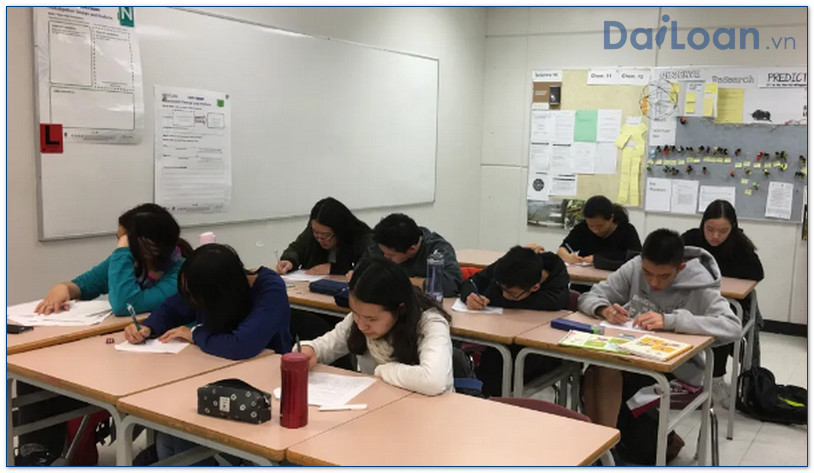

- 我想學習如何寫中文。 (Wǒ xiǎng xuéxí rúhé xiě zhōngwén.) – “I want to learn how to write in Chinese.”
- 他每晚都會寫日記。 (Tā měi wǎn dōu huì xiě rìjì.) – “He writes in his diary every night.”
3.3 Combining with Other Verbs
Sometimes, 寫 is used in conjunction with other verbs to convey more complex meanings:
- 她希望能夠寫出一本書。 (Tā xīwàng nénggòu xiě chū yī běn shū.) – “She hopes to be able to write a book.”


4. Conclusion
Understanding the meaning of 寫 (xiě), its grammatical structure, and its usage in sentences enhances proficiency in the Chinese language. Mastery of this verb allows learners to express thoughts, communicate ideas, and engage with Chinese culture more deeply. Regular practice with example sentences and applying the grammatical patterns will solidify your understanding and fluency in writing Chinese.


Sứ mệnh của Chuyên là giúp đỡ và truyền cảm hứng cho các bạn trẻ Việt Nam sang Đài Loan học tập, sinh sống và làm việc. Là cầu nối để lan tỏa giá trị tinh hoa nguồn nhân lực Việt Nam đến với Đài Loan và trên toàn cầu.
CÓ THỂ BẠN QUAN TÂM
Du học Đài Loan
Lao Động Đài Loan
Việc Làm Đài Loan
Đơn Hàng Đài Loan
Visa Đài Loan
Du Lịch Đài Loan
Tiếng Đài Loan
KẾT NỐI VỚI CHUYÊN
Zalo: https://zalo.me/0936126566
Website: www.dailoan.vn