


In this article, we will dive deep into the meaning, grammatical structure, and practical use of the Chinese term 單單 (dān dān). As a common term in Mandarin, understanding its nuances can aid both learners and fluent speakers in their daily communication.
What Does 單單 (dān dān) Mean?
The term 單單 (dān dān) is an adverb in Mandarin, typically translating to ‘only’ or ‘merely’. It conveys a sense of limitation or exclusivity, suggesting that something is singular or not accompanied by other elements. In context, it’s used to emphasize the sole existence or role of a particular subject.
Grammatical Structure of 單單
Part of Speech
As mentioned, 單單 (dān dān) functions primarily as an adverb. Its placement in a sentence is flexible but often found immediately before the verb or adjective it modifies to highlight exclusivity.
Usage in Sentences
In Mandarin, the correct structure when using 單單 typically follows this format:
- 單單 + Verb/Adjective + 其他 (other elements)
Example Sentences Using 單單
Everyday Contexts
- 他單單是一名學生。
Tā dān dān shì yī míng xuéshēng.
He is merely a student. - 我單單想喝水。
Wǒ dān dān xiǎng hē shuǐ.
I only want to drink water. - 這件事單單是誤會。
Zhè jiàn shì dān dān shì wùhuì.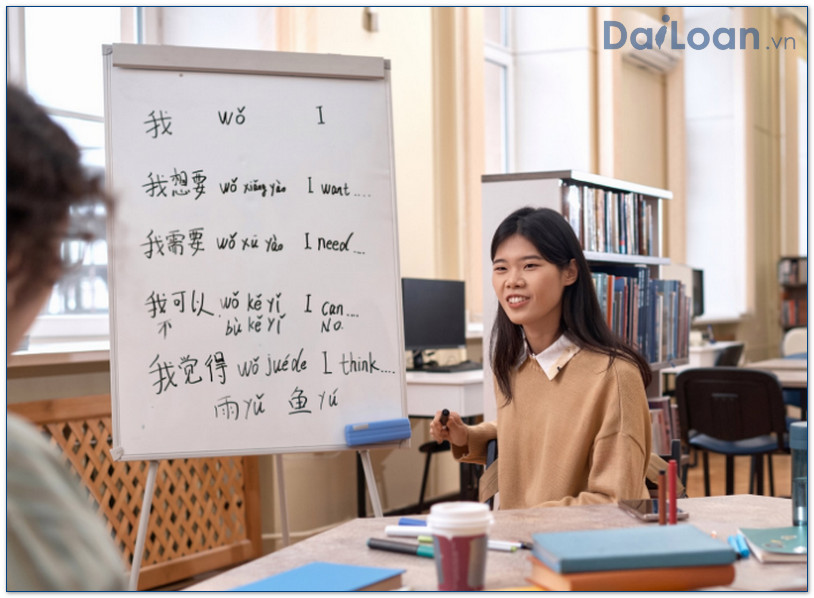
This matter is merely a misunderstanding.

In Comparison
Occasionally, 單單 (dān dān) can also serve to contrast a situation:
- 她單單愛學習數學,卻不喜歡科學。
Tā dān dān ài xuéxí shùxué, què bù xǐhuān kēxué.
She only loves studying mathematics but does not like science.
Emphasizing Limitation
- 這份禮物單單是我們的心意。
Zhè fèn lǐwù dān dān shì wǒmen de xīnyì.
This gift is merely our intention. - 他單單想要一個答案。
Tā dān dān xiǎng yào yī gè dá’àn.
He only wants one answer.

Conclusion
Understanding the term 單單 (dān dān) enriches your comprehension of Chinese conversational nuances. It’s an essential adverb that underlines exclusivity and limitation in various contexts. By using these grammatical structures and example sentences as a guide, learners can effectively incorporate this term into their Mandarin vocabulary.


Sứ mệnh của Chuyên là giúp đỡ và truyền cảm hứng cho các bạn trẻ Việt Nam sang Đài Loan học tập, sinh sống và làm việc. Là cầu nối để lan tỏa giá trị tinh hoa nguồn nhân lực Việt Nam đến với Đài Loan và trên toàn cầu.
CÓ THỂ BẠN QUAN TÂM
Du học Đài Loan
Lao Động Đài Loan
Việc Làm Đài Loan
Đơn Hàng Đài Loan
Visa Đài Loan
Du Lịch Đài Loan
Tiếng Đài Loan
KẾT NỐI VỚI CHUYÊN
Zalo: https://zalo.me/0936126566
Website: www.dailoan.vn