



In the rich tapestry of the Chinese language, certain terms reveal more than just literal meanings; they embody cultural significance and linguistic structure. One such term is 對白 (duì bái). This article will delve into the meaning of 對白, its grammatical structure, and provide example sentences to enhance the understanding of its use in everyday conversation.
What is 對白 (duì bái)?
The term 對白 (duì bái) translates to “dialogue” in English. It is commonly used to refer to the lines spoken by characters in plays, films, or any form of dramatic writing. The phrase also carries connotations of interaction and communication, highlighting a two-way exchange between characters or speakers.
The Components of 對白
To further understand 對白, we can break it down into two parts:
- 對 (duì): This character means “to face” or “to respond,” indicating a reciprocal action or interaction.
- 白 (bái): This character often translates to “to speak” or “to say,” adding the element of verbal communication.
Grammatical Structure of 對白
The structure of 對白 (duì bái) in sentences is typically straightforward, reflecting its function in dialogue. In the context of grammatical usage:
Noun Usage
As a noun, 對白 can be the subject or object of a sentence. For example:
- 這部電影的對白很精彩。 (Zhè bù diànyǐng de duìbái hěn jīngcǎi.) — “The dialogue in this movie is fantastic.”
As a Verb
While 對白 is primarily used as a noun, it can occasionally be used in a verbal form in less common usages, where it implies the act of speaking in a dialogue. For instance:
- 他們對白得非常自然。 (Tāmen duìbái de fēicháng zìrán.) — “They speak in dialogue very naturally.”
Example Sentences Using 對白

To gain a better understanding of how 對白 functions in real-life Chinese communication, here are several example sentences:
In Film and Theatre
- 這部劇的對白讓人印象深刻。 (Zhè bù jù de duìbái ràng rén yìnxiàng shēnkè.) — “The dialogue in this play leaves a deep impression.”

- 對白中有很多幽默的元素。 (Duìbái zhōng yǒu hěn duō yōumò de yuánsù.) — “There are many humorous elements in the dialogue.”

In Everyday Conversations
- 她的對白中透露了很多情感。 (Tā de duìbái zhōng tòulùle hěn duō qínggǎn.) — “Her dialogue reveals a lot of emotion.”
- 學習對白可以幫助我們提高語言技能。 (Xuéxí duìbái kěyǐ bāngzhù wǒmen tígāo yǔyán jìnéng.) — “Learning dialogues can help us improve our language skills.”
Conclusion
In conclusion, the term 對白 (duì bái) encapsulates more than just “dialogue”; it represents a crucial aspect of communication in the Chinese language. Whether used in the context of cinema, theater, or daily exchanges, understanding its structure and application can significantly enhance one’s proficiency in Chinese. By incorporating dialogues into learning, students can not only grasp vocabulary and grammar but also appreciate the emotional and cultural nuances that come with communication.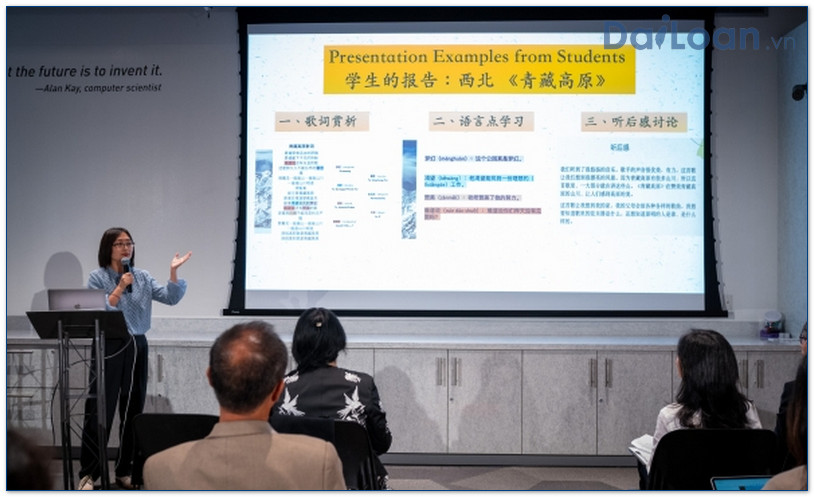

So next time you encounter 對白, remember that it is a bridge that connects speakers, conveying meaning, emotion, and interaction, essential in both written and spoken forms of Chinese.


Sứ mệnh của Chuyên là giúp đỡ và truyền cảm hứng cho các bạn trẻ Việt Nam sang Đài Loan học tập, sinh sống và làm việc. Là cầu nối để lan tỏa giá trị tinh hoa nguồn nhân lực Việt Nam đến với Đài Loan và trên toàn cầu.
CÓ THỂ BẠN QUAN TÂM
Du học Đài Loan
Lao Động Đài Loan
Việc Làm Đài Loan
Đơn Hàng Đài Loan
Visa Đài Loan
Du Lịch Đài Loan
Tiếng Đài Loan
KẾT NỐI VỚI CHUYÊN
Zalo: https://zalo.me/0936126566
Website: www.dailoan.vn