


The Chinese character 

What Does 疊 (dié) Mean?
In its simplest form, 疊 refers to the concept of layering, folding, or stacking. The character comprises two components, “疒” (nè) which traditionally pertains to sickness, and “疊” itself, which signifies repeated actions or plural states.
The meanings of 疊 can be richly contextual, including:
- To stack
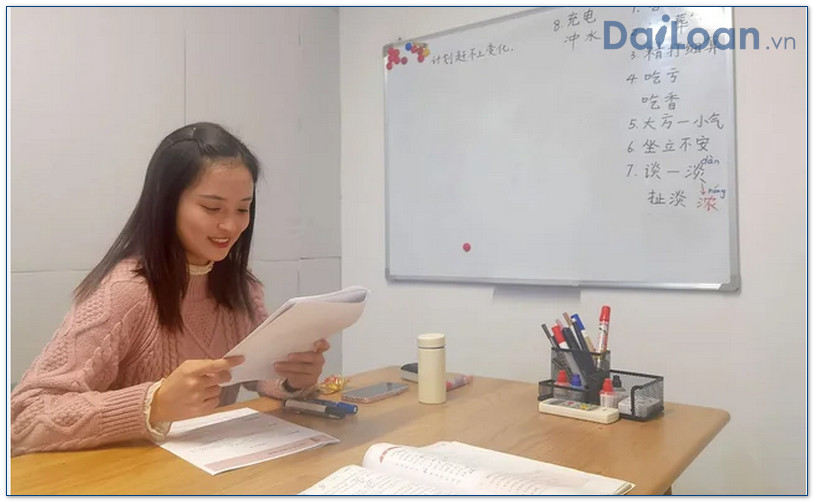
- To repeat: It is often used to describe actions that are done repeatedly or in layers, enhancing the texture of an action.
- To fold: In some contexts, it can also refer to the motion of folding items such as fabric, paper, etc.

Contextual Interpretation
Depending on context, 疊 can also refer to more abstract notions. For example, in literature, it may describe emotional states that are complex and layered, similar to how one might perceive different emotions unfolding over time.
Grammatical Structure of 疊 (dié)
The grammatical structure of 疊 presents itself primarily as a verb in phrases, embodying actions performed by subjects and directed at objects. As a result, it can appear in a wide range of sentence constructions.
Usage as a Verb
As a verb, 疊 functions prominently in sentences that illustrate the concept of layering or repeating actions. In Chinese, the typical sentence structure follows the Subject-Verb-Object (SVO) format:
Subject + 疊 (dié) + Object
For instance:
- 我把书疊在桌子上。
(Wǒ bǎ shū dié zài zhuōzi shàng.)
“I stacked the books on the table.” - 他们在这个地方疊了很多沙子。
(Tāmen zài zhège dìfāng dié le hěn duō shāzi.)
“They piled a lot of sand in this area.”
Usage in Simple Sentences
Here are a few more structures where 疊 is effectively used:
- To express repetition:
这首歌我听疊了很多次。
(Zhè shǒu gē wǒ tīng dié le hěn duō cì.)
“I’ve listened to this song many times.” - To express the action of folding:
她把衣服疊好放进衣柜。
(Tā bǎ yīfú dié hǎo fàng jìn yīguì.)
“She folded the clothes neatly and put them in the wardrobe.”
Example Sentences Using 疊 (dié)
Layering Actions
Here are specific examples of using 疊 within sentences to better illustrate its versatility:
- 他把那些石头疊起来。
(Tā bǎ nàxiē shítou dié qǐlái.)
“He stacked those stones.” - 我们学校的活动疊得很紧密。
(Wǒmen xuéxiào de huódòng dié dé hěn jǐnmì.)
“The activities at our school are packed closely together.”
Describing Layered Emotions
In a more literary context, one might describe emotions or situations:
- 他的心情疊着纠结与快乐。
(Tā de xīnqíng dié zhe jiūjié yǔ kuàilè.)
“His feelings are layered with confusion and happiness.” - 历史是由许多疊加的故事形成的。
(Lìshǐ shì yóu xǔduō diéjiā de gùshì xíngchéng de.)
“History is formed by many layered stories.”
Conclusion
The character 疊 (dié) encapsulates a rich variety of meanings, from its literal interpretations of stacking and folding to its metaphorical uses that capture the complexity of experiences and actions. Understanding its grammatical structure and seeing it in context provides learners with a valuable tool for mastering the intricacies of the Chinese language. Whether you’re looking to enhance your conversational skills or delve into literary studies, the character 疊 offers essential insight into both linguistic and cultural dimensions of Chinese.


Sứ mệnh của Chuyên là giúp đỡ và truyền cảm hứng cho các bạn trẻ Việt Nam sang Đài Loan học tập, sinh sống và làm việc. Là cầu nối để lan tỏa giá trị tinh hoa nguồn nhân lực Việt Nam đến với Đài Loan và trên toàn cầu.
CÓ THỂ BẠN QUAN TÂM
Du học Đài Loan
Lao Động Đài Loan
Việc Làm Đài Loan
Đơn Hàng Đài Loan
Visa Đài Loan
Du Lịch Đài Loan
Tiếng Đài Loan
KẾT NỐI VỚI CHUYÊN
Zalo: https://zalo.me/0936126566
Website: www.dailoan.vn