


Introduction
In this article, we will explore the term 

What Does 準備 (zhǔnbèi) Mean?
The term 準備 (zhǔnbèi) translates to “prepare” in English. It conveys the idea of making arrangements, getting ready for an event, or equipping oneself with necessary items. It is commonly used in both spoken and written Chinese, making it an essential component of daily conversation.
Usage in Context
In a practical context, one might use 準備 when discussing plans, setting up an event, or even in the context of personal preparation for a task or an exam. This versatility makes it a valuable term in the lexicon of any Chinese learner.
Grammatical Structure of 準備 (zhǔnbèi)
In Chinese, 準備 is primarily used as a verb, but it can also function as a noun depending on the context.
As a Verb
As a verb, 準備 indicates the action of preparing. Its structure is straightforward and follows the standard verb placement in a sentence. For example:
- Subject + 準備 + Object
Example: 我準備食物。 (Wǒ zhǔnbèi shíwù.) – “I prepare food.”
As a Noun
When used as a noun, 準備 refers to the preparations made for an event or task.
- Subject + 是 + 準備
Example: 這是我的準備。 (Zhè shì wǒ de zhǔnbèi.) – “This is my preparation.”
Example Sentences Using 準備 (zhǔnbèi)
Everyday Situations
- 他正在準備考試。(Tā zhèngzài zhǔnbèi kǎoshì.) – “He is preparing for the exam.”
- 我們需要準備晚餐。(Wǒmen xūyào zhǔnbèi wǎncān.) – “We need to prepare dinner.”
Planning Events
- 我已經準備好了。(Wǒ yǐjīng zhǔnbèi hǎole.) – “I am already prepared.”
- 請幫我準備這個會議的材料。(Qǐng bāng wǒ zhǔnbèi zhège huìyì de cáiliào.) – “Please help me prepare the materials for the meeting.”
Personal Preparation
- 當你出門前,記得準備好所有的東西。(Dāng nǐ chūmén qián, jìdé zhǔnbèi hǎo suǒyǒu de dōngxī.) – “Remember to prepare everything before you go out.”
- 我總是提前準備我的旅行行李。(Wǒ zǒng shì tíqián zhǔnbèi wǒ de lǚxíng xínglǐ.) – “I always prepare my travel luggage in advance.”
Conclusion
Understanding the meaning and application of 準備 (zhǔnbèi)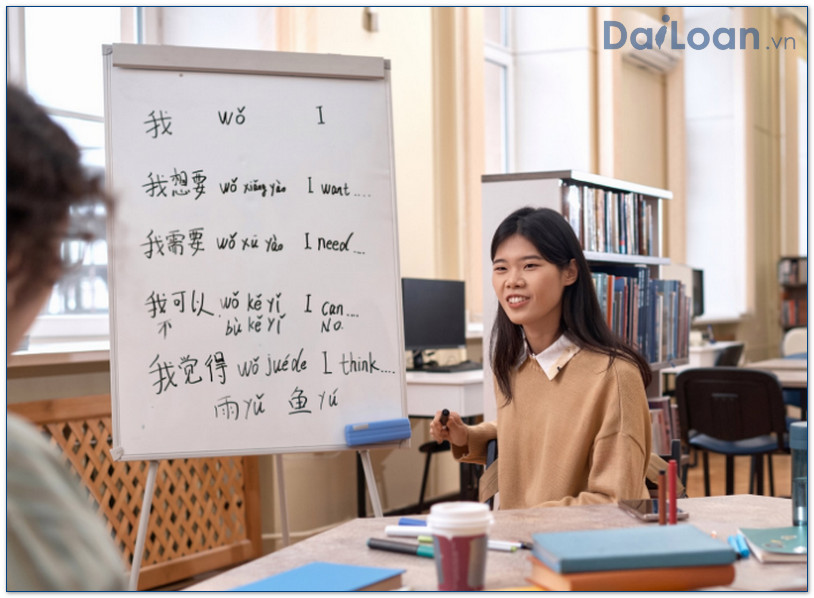



Sứ mệnh của Chuyên là giúp đỡ và truyền cảm hứng cho các bạn trẻ Việt Nam sang Đài Loan học tập, sinh sống và làm việc. Là cầu nối để lan tỏa giá trị tinh hoa nguồn nhân lực Việt Nam đến với Đài Loan và trên toàn cầu.
CÓ THỂ BẠN QUAN TÂM
Du học Đài Loan
Lao Động Đài Loan
Việc Làm Đài Loan
Đơn Hàng Đài Loan
Visa Đài Loan
Du Lịch Đài Loan
Tiếng Đài Loan
KẾT NỐI VỚI CHUYÊN
Zalo: https://zalo.me/0936126566
Website: www.dailoan.vn